
Stability when the grid is under pressure
GridGuard helps reduce peak demand by intelligently managing flexible loads—supporting more reliable power for homes and communities.

What GridGuard does
GridGuard is designed to reduce peak demand and keep essential loads stable by intelligently managing high‑draw appliances—helping communities and utilities smooth the load curve.
Peak shaving
Automatically limits or shifts flexible loads to reduce simultaneous demand spikes during critical periods.
Resilience
Improves household stability through controlled load behavior—especially when the grid is constrained.
Scalable deployments
Built for rollout programs where standardization, telemetry, and supportability matter.
Why it matters
Load shedding is expensive. Demand reduction at scale can delay infrastructure upgrades and reduce outage frequency—while still protecting customer comfort and equipment life.
- Reduces load‑shedding pressure through demand smoothing
- Improves user experience versus hard cut‑offs
- Enables data-driven planning for partners
Built on proven switching and control
GridGuard shares a common technology base with the broader PowerPulse platform—designed to be reliable, safe, and upgradeable over time.
Smart control
Configurable logic to manage loads in response to time, grid conditions, or program rules.
Partner-ready
Structured programs for installers, municipalities, and solution partners—built for support and scale.
The PowerPulse network
At scale, the PowerPulse network transforms millions of everyday appliances into a distributed power station embedded within South Africa’s homes and become becomes comparable to:
- Utility peaking plant output
- Municipal load-reduction initiatives
- Industrial demand-response programmes
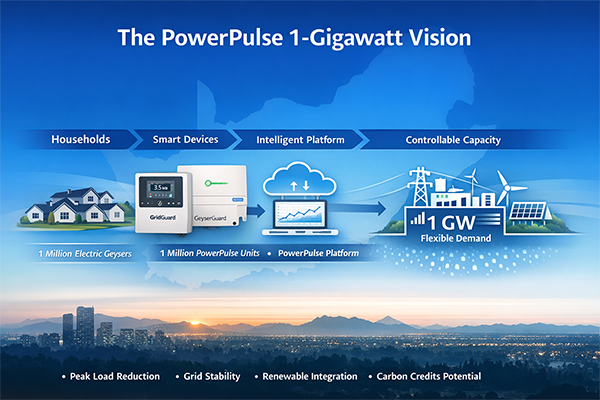
Grid Stability Services
PowerPulse devices can respond rapidly to grid conditions, enabling Eskom or municipal utilities to reduce electricity demand during peak stress periods without disconnecting entire suburbs. This provides
- Precision demand-response capability
- Improves grid stability
- Reduces reliance on disruptive load shedding